English


English Curriculum intent:
To provide a broad and ambitious English curriculum, rich in skills and knowledge, which ignites curiosity and prepares our pupils well for future learning or employment.
Our English curriculum will give students the opportunity to:
- read complex passages confidently with rich vocabulary which challenge and inspire
- demonstrate mastery of reading through discussion, presentation and writing;
- enjoy a wide range of fiction and non-fiction texts which help them to connect with the world around them;
- develop cultural capital that will help remove barriers to achievement in school, future learning and the world of work;
- write clearly, fluently and accurately in plain English, showing flair and creativity where appropriate;
- develop detailed ideas in writing, adapting language to audience and purpose;
- use a wide range of appropriate and ambitious vocabulary with precision;
- produce ‘beautiful work’ of which they can be proud;
- in talk, articulate and express their ideas, views and opinions about a wide range of topics clearly, confidently and respectfully;
- develop their character, including resilience, confidence and independence, so that they contribute positively to the life of the school, the community and the wider environment.
(Further information about Phonics can be found on the main 'Curriculum' page.)
English Curriculum and Progression Documents
Grammatical Term Definition
Literacy Week '26
Years 5 and 6 were extremely fortunate to have the author Murray Fisher visit. We were treated to an inspiring assembly where we all learnt how to become authors and then Year 6 had the opportunity to take part in workshops where they planned their own characters for a story.
Murray also signed books for those who had pre-ordered and gave all children a chance to have something signed as a memento of the day.
What a fantastic start to the week!


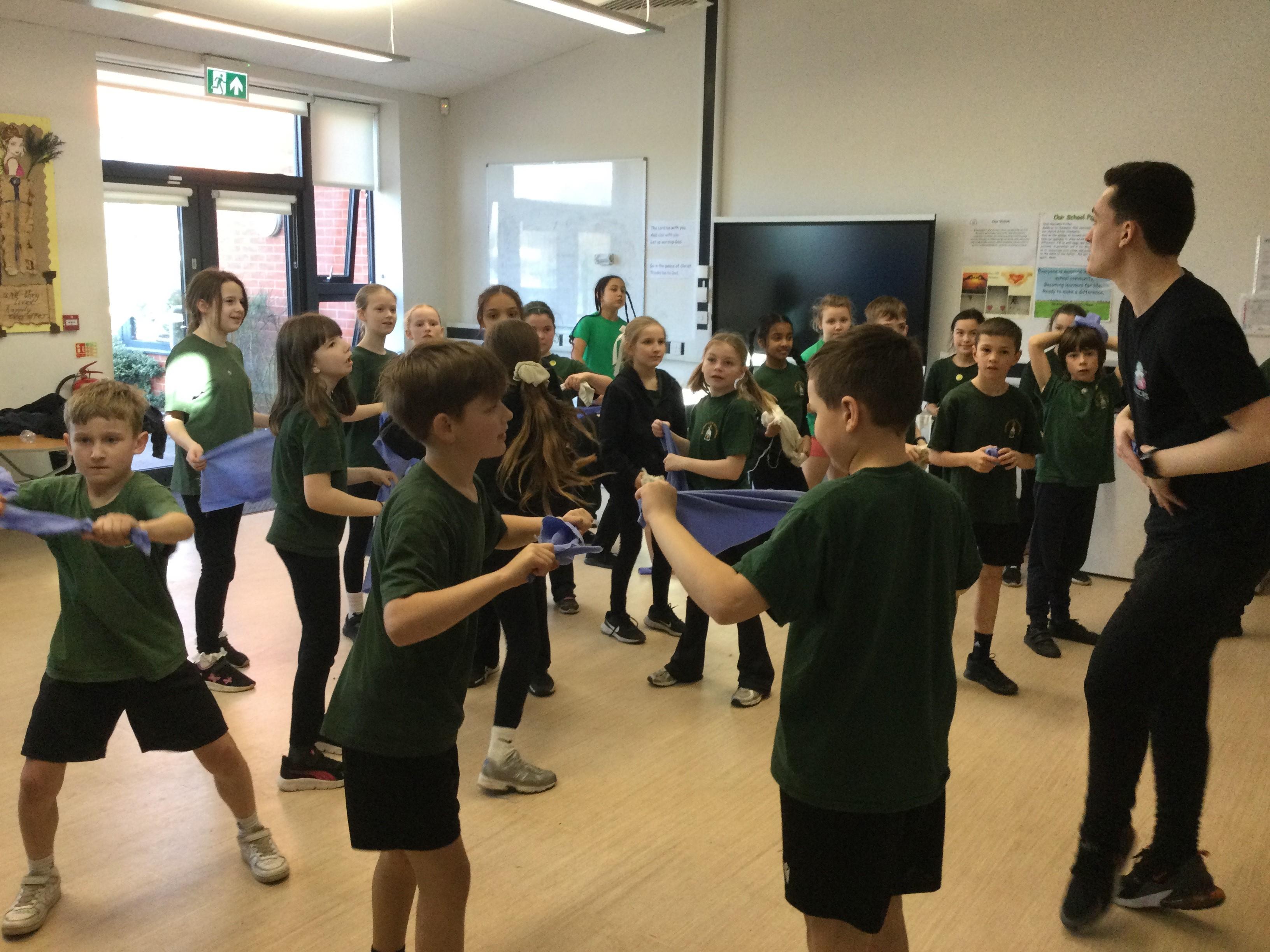
Josh from Rascals held another year of successful workshops for our Yr 3/4/5 classes on Tuesday 3rd March. He used the music from Annie and introduced props, movement and dance. It was wonderful to see new, and emerging, dancers and thespians really shine in these enrichment opportunities. Year 4 also capitalised on his experience and utilised his help to polish some production performances. Thank you, Josh!
This week KS1 and EYFS absolutely loved stepping into character and immersing themselves in imaginative role play during ‘Pop-up Play’. From caring vets and busy builders to campsite adventurers, talented hairdressers, beauty salon stylists, and restaurant chefs and servers, every area was buzzing with creativity and excitement. With a wonderful selection of outfits to bring each role to life, the children fully embraced the experience and even the adults couldn’t resist joining in the fun!


Family Read
At Elsenham, each term we love having family members, or close family friends, in to school to read with our children. Dates for this academic year will be published in the weekly newsletter.
Oracy
We started Spring Term with an Oracy assembly all about ‘Thunks’, and from now on as classes will be discussing the same weekly ‘Thunk’.
Thunks are questions or statements that make the children think ... there are NO right or wrong answers.
The children do, however, need to think about their answers and be able to justify them – in other words, they will not say the first thing that comes into their head, and, they must be fully prepared to explain their answers when they give them. During ‘Thunk’ time, they will listen to other peoples’ answers and be ready to discuss their ideas in a respectful and well-mannered way.
One such thunk could be, 'Should all door handles in the school be made from chocolate?'
House Poetry
Our House Poetry Final was a truly special event, filled with creativity, confidence and a real love of language. We were delighted to welcome Mayor Richard, the Mayor of Bishop’s Stortford, as our guest judge. He was fantastic, sharing two of his own poems with the children and speaking passionately about the importance of poetry and self-expression. His enthusiasm really inspired everyone in the room. A big thank you to Mrs Carruthers for organising for him to join us - it made the occasion even more memorable.
We were also treated to a dazzling opening performance from our talented KS2 dancers, who brought energy and flair to the stage with their routine to Come Alive. It was the perfect way to start the afternoon and set the tone for what was to come.
The standard of performances was incredible. We saw such a wide range of poetry, from beautifully crafted original pieces to powerful performances of well-known poets such as Michael Rosen and Benjamin Zephaniah. Every pupil brought something unique and it was clear how much effort and courage had gone into preparing for the final.
A huge congratulations to Swan House, who took 1st place with a brilliant collective effort - well deserved!
Most importantly, every single performer should feel extremely proud. Standing up and performing poetry in front of an audience takes real bravery and they absolutely rose to the occasion.